


In this guide
A useful parking lot maintenance plan starts with five checks: drainage, cracks, potholes, pavement markings, and pedestrian access. For a commercial property, we recommend turning those observations into a repair list, a budget, and a work schedule that accounts for tenants and visitors.
In Tampa Bay, frequent showers and thunderstorms make water a central part of that plan, especially from late spring into early fall (National Weather Service). Use the checklist below to organize a site walkthrough and ask better questions before approving work.
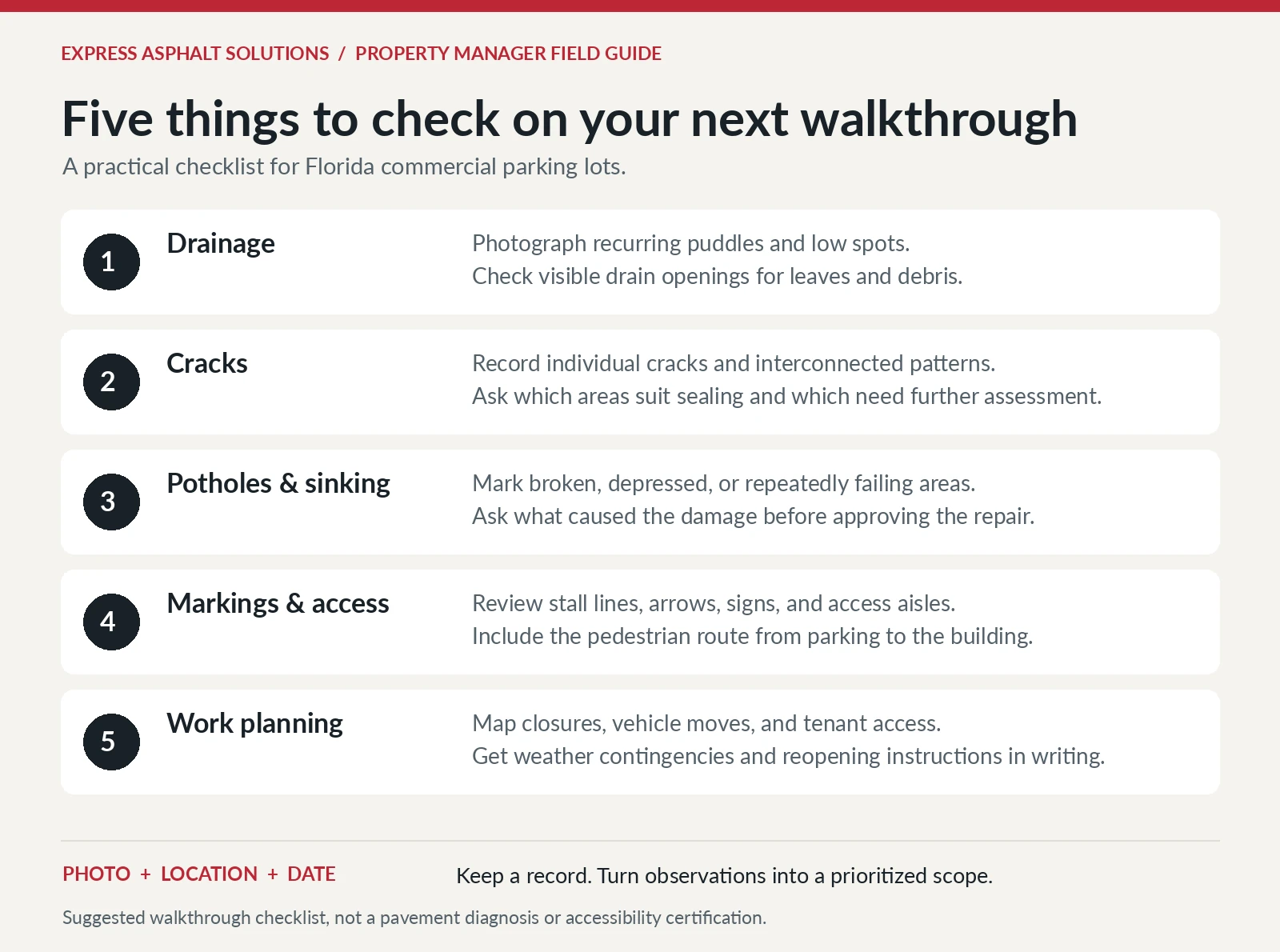 Open full-size graphic
Start with drainage, not just appearance
A parking lot can look presentable while problems develop below the surface. Poor drainage can weaken the materials supporting the asphalt, so recurring water problems deserve attention alongside visible pavement damage (Pavement Interactive).
Once a storm has passed and conditions are safe, take photos of areas where water collects. Mark the locations on a simple site map and check them again later rather than relying on memory.
- Drain inlets: Look for leaves, litter, and sediment around the openings. Arrange appropriate cleaning instead of entering a drainage structure yourself.
- Low spots: Record where water remains and whether the same location keeps appearing after rain.
- Traffic areas: Include entrances, delivery routes, dumpster approaches, and heavily used parking aisles in the walkthrough.
- Pedestrian routes: Note water or debris affecting walkways, curb ramps, and building entrances.
If a puddle keeps returning, ask the contractor to investigate why. Make the drainage question part of the repair scope before approving a surface treatment.
Which cracks need sealing, and which need repair?
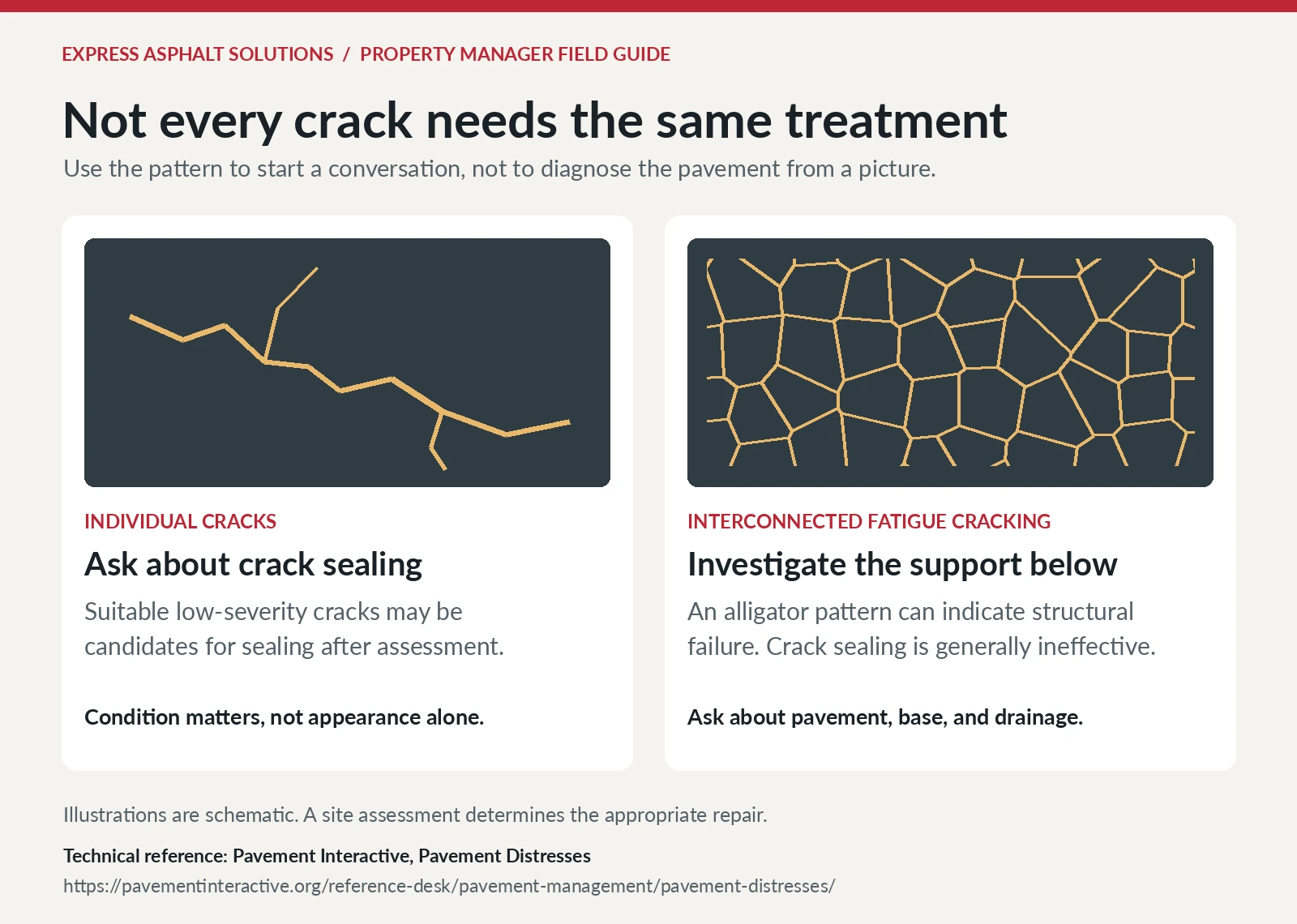
Not every crack needs the same treatment. Suitable low-severity cracks may benefit from sealing, while interconnected fatigue cracks, often called alligator cracking, can indicate a structural problem for which crack sealing is generally ineffective (Pavement Interactive).
During your walkthrough, separate individual cracks from areas that are broken up, depressed, or repeatedly failing. Photograph both the close-up damage and its location within the lot.
- Individual cracks: Ask whether cleaning and crack sealing are appropriate for their condition.
- Potholes and broken areas: Ask what pavement will be removed, what lies beneath it, and what the proposed repair includes.
- Alligator cracking or sinking: Request an assessment of the pavement support and drainage, not simply a price to cover the surface.
For localized fatigue failure, an effective repair may require removing damaged pavement, correcting poor underlying support or drainage, and then patching the area (Pavement Interactive). Ask the written proposal to distinguish the underlying repairs from the finish work.
 Open full-size graphic
When does sealcoating make sense?
Use pavement condition to start the conversation, not an automatic annual calendar. The Asphalt Institute identifies surface sealing as a treatment for aging, dry asphalt, small surface cracks and voids, and certain surface deterioration, with timing influenced by the pavement and its environment (Asphalt Institute).
Before approving asphalt sealcoating, ask the contractor to identify any repairs that belong earlier in the scope. Request details on cleaning, surface preparation, the proposed product, weather limitations, and reopening instructions.
Treat those instructions as job-specific. Do not build tenant notices around a generic promise that every surface can reopen after the same number of hours.
Check striping and accessible routes together
When reviewing parking lot striping, look beyond faded stall lines. Include directional arrows, pedestrian crossings, accessible spaces, access aisles, signs, and the route from parking to the building in the review.
Accessible parking involves more than a painted symbol: space and aisle dimensions, slopes, signage, and an accessible route all matter (U.S. Department of Justice). Before a restriping or layout project, have the proposed work reviewed against applicable accessibility requirements rather than assuming the old layout should simply be copied.
What should your maintenance schedule look like?
Use this as a practical starting point, not a mandatory industry schedule. Adjust the frequency to your property’s traffic, condition, staffing, and recent problems.
- Monthly walkthrough: Photograph new damage, check visible drainage openings, review markings, and record access concerns.
- After significant storms: Revisit known low spots and check for new damage or obstructions once it is safe.
- Before the rainy season: Review unresolved drainage issues and prioritize repairs with your contractor.
- Annual budget review: Separate immediate repairs, preventive work, and larger rehabilitation needs. Ask which items should be handled first and which can reasonably wait.
Keep a dated record of photos, estimates, completed work, and areas that need another look. Give that record to anyone preparing a proposal so the conversation starts with the property’s actual history.
Plan the work around the people using the lot
Ask for a work-area map before repairs begin. For an occupied property, review which spaces will close, where vehicles will move, and how tenants, deliveries, pedestrians, and emergency access will be handled.
Include accessible parking and routes in that plan rather than treating them as an afterthought. Put vehicle-removal deadlines, tenant notifications, weather contingencies, and reopening instructions in writing.
Turn your observations into a clear scope
You do not need to diagnose every pavement problem before contacting a contractor. Bring your photos, trouble spots, and operating constraints, then ask for a proposal that separates necessary repairs from optional appearance improvements.
For your Tampa Bay commercial property, contact Express Asphalt Solutions to discuss a parking lot assessment and estimate. Start with what the lot needs, then build the work around your budget and the people who use it.